
or to grade, review, and add to your backlog.
Description
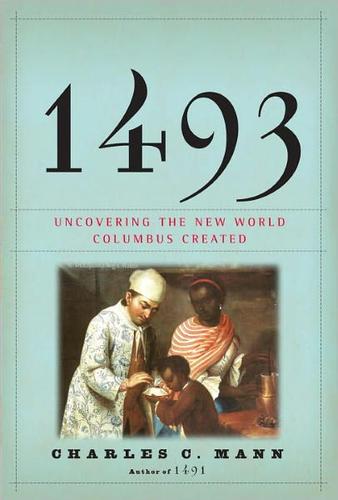
"From the author of 1491--the best-selling study of the pre-Columbian Americas--a deeply engaging new history that explores the most momentous biological event since the death of the dinosaurs. More than 200 million years ago, geological forces split apart the continents. Isolated from each other, the two halves of the world developed totally different suites of plants and animals. Columbus's voyages brought them back together--and marked the beginning of an extraordinary exchange of flora and fauna between Eurasia and the Americas. As Charles Mann shows, this global ecological tumult--the "Columbian Exchange"--underlies much of subsequent human history. Presenting the latest generation of research by scientists, Mann shows how the creation of this worldwide network of exchange fostered the rise of Europe, devastated imperial China, convulsed Africa, and for two centuries made Manila and Mexico City-- where Asia, Europe, and the new frontier of the Americas dynamically interacted--the center of the world. In 1493, Charles Mann gives us an eye-opening scientific interpretation of our past, unequaled in its authority and fascination"--
Community reviews
No reviews yet
Be the first to review this book.
More like this
- Sapiens: A Graphic History, Volume 3 - The Masters of HistoryBook
- Two Billion Cars: Driving Toward SustainabilityBook

- Bogus Science: Or, Some People Really Believe These ThingsBook

- Denying Science: Conspiracy Theories, Media Distortions, and the War Against RealityBook

- How to Destroy the Universe: and 34 Other Really Interesting Uses of PhysicsBook

- How and Where to Go Beyond the Standard Model - Proceedings of the International School of Subnuclear PhysicsBook

- The Hands-On Guide for Science Communicators: A Step-by-Step Approach to Public OutreachBook

- Steps Toward Large-Scale Data Integration in the Sciences: Summary of a WorkshopBook