
or to grade, review, and add to your backlog.
Description
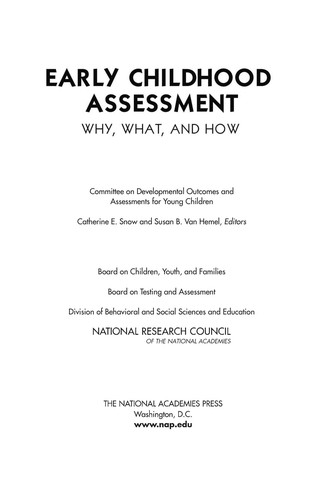
The assessment of young children's development and learning has recently taken on new importance. Private and government organizations are developing programs to enhance the school readiness of all young children, especially children from economically disadvantaged homes and communities and children with special needs. Well-planned and effective assessment can inform teaching and program improvement, and contribute to better outcomes for children. This book affirms that assessments can make crucial contributions to the improvement of children's well-being, but only if they are well designed, implemented effectively, developed in the context of systematic planning, and are interpreted and used appropriately. Otherwise, assessment of children and programs can have negative consequences for both. The value of assessments therefore requires fundamental attention to their purpose and the design of the larger systems in which they are used. Early Childhood Assessment addresses these issues by identifying the important outcomes for children from birth to age 5 and the quality and purposes of different techniques and instruments for developmental assessments.
Community reviews
No reviews yet
Be the first to review this book.
More like this
- The Table Comes First: Family, France, and the Meaning of FoodBook

- Don't Shoot: One Man, a Street Fellowship, and the End of Violence in Inner-City AmericaBook

- Poor PeopleBook

- The Danger of A Single StoryBook

- L'art d'etre libre: Dans un monde absurdeBook

- L'ozio come stile di vitaBook

- The Origins of the Future: Ten Questions for the Next Ten YearsBook

- What Was the Hipster? A Sociological InvestigationBook