

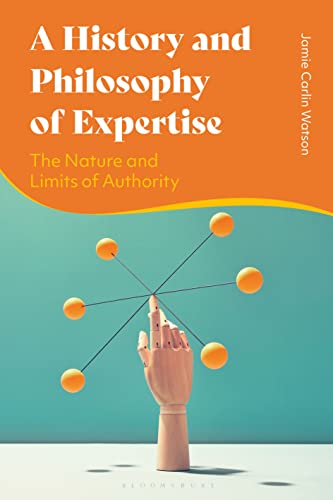
History and Philosophy of Expertise, A: The Nature and Limits of Authority
Jamie Carlin WatsonHistory and Philosophy of Expertise, A: The Nature and Limits of Authority
or to grade, review, and add to your backlog.
Description
"Experts are supposed to know more than the rest of us. Yet this raises important questions about what it means to be an expert, what sort of authority experts have, and what role they should play in society. In this study of the long history and philosophy of expertise, Jamie Carlin Watson tackles the question of authority and why we can be skeptical of what experts say. His review sketches out the ancient origins of the concept, discussing its early association with cunning, skill and authority and covering the sort of training that ancient thinkers believed was required for expertise. Watson looks at the evolution of the expert in the middle ages into a type of 'genius' or 'innate talent' , moving to the role of psychological research in 16th-century Germany, the influence of Darwin, the impact of behaviorism and its interest to computer scientists, and its transformation into the largely cognitive concept psychologists study today. A comprehensive tour from ancient Greece to the 20th century, this intellectual history reveals the strengths and weaknesses of different perspectives and makes a valuable contribution to the contemporary philosophical debates on authority, testimony, disagreement and trust."--
Community reviews
No reviews yet. Be the first to review this book.
More like this

The Politics of History
Howard Zinn
What Is Subjectivity?
Jean-Paul Sartre
Consciousness Is All There Is: How Understanding and Experiencing Consciousness Will Transform Your Life
Tony Nader

Siete ensayos de filosofia de la liberacion: Hacia una fundamentacion del giro decolonial
Enrique Dussel

14 tesis de etica: Hacia la esencia del pensamiento critico
Enrique Dussel

Figures of Catastrophe: The Condition of Culture Novel
Francis Mulhern

How to Die
Seneca

Philosophy's Future: The Problem of Philosophical Progress
Russell Blackford