

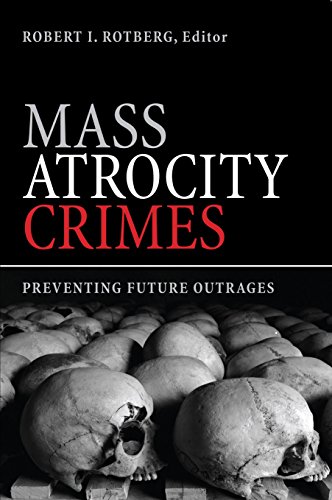
Mass Atrocity Crimes: Preventing Future Outrages
Robert I. RotbergMass Atrocity Crimes: Preventing Future Outrages
or to grade, review, and add to your backlog.
Description
"The Mass Atrocity Response Operations (MARO) Project focus is to enable the United States and the international community to stop genocide and mass atrocity as part of a broader integrated strategy by explaining key relevant military concepts and planning considerations. Failure to act in the face of mass killings of civilians is not simply a function of political will or legal authority; the failure also reflects a lack of thinking about how military forces might respond. States and regional and international organizations must better understand and prepare for the unique operational and moral challenges that military forces would face in a MARO. Such an effort offers several benefits, including the creation of a wider range of potentially effective military responses. Advance planning with possible partners would greatly facilitate coalition operations. Developing more effective intervention options may help strengthen deterrence of would-be perpetrators.^ By highlighting the complexities of responding militarily after violence against civilians has already become widespread, MARO planning should increase policymakers' appreciation of the value and economy of preventive efforts. Since prevention will not succeed every time, some states may nonetheless find themselves conducting a MARO. They may initiate intervention or adjust the mission of forces that deployed for other purposes, where mass violence against civilians becomes a primary challenge. The concrete and practical challenges of using military forces to halt ongoing mass atrocities through a MARO are addressed. The Project developed operational concepts, a tailored planning guide, tabletop exercises, and other tools for military institutions and political actors.^ While military force will not always be required to halt mass atrocity, the MARO Project helps make credible, effective options more likely and better prepares intervening forces in the event that they are directed to act in this respect. The Project can help shift the policy debate from 'whether' to 'how' to intervene to stop widespread violence against civilians"--Foreword.
Community reviews
No reviews yet
Be the first to review this book.
More like this
 Tomorrow's Battlefield: U.S. Proxy Wars and Secret Ops in Africa
 Terrorism and War
 The Politically Incorrect Guide to Socialism
 The Case for Socialism
 Payback: Debt and the Shadow Side of Wealth
 Truth, Torture, and the American Way: The History and Consequences of U.S. Involvement in Torture
 Our Endangered Values: America's Moral Crisis
 Occupy!: Scenes from Occupied America