

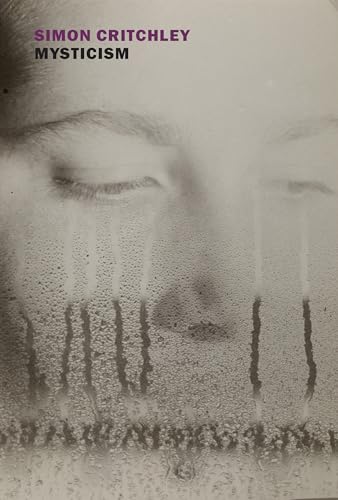
Mysticism
Simon CritchleyMysticism
or to grade, review, and add to your backlog.
Description
A probing, inspiring exploration of mysticism not as religious practice but as a mode of experience and way of life by one of the most provocative philosophical thinkers of our time. Why mysticism? It has been called “experience in its most intense form,” and in his new book the philosopher Simon Critchley poses a simple question to the reader: Wouldn’t you like to taste this intensity? Wouldn’t you like to be lifted up and out of yourself into a sheer feeling of aliveness, both your life and those of the creatures that surround you? If so, it might be well worthwhile trying to learn what is meant by mysticism and how it can shift, elevate, and deepen the sense of our lives. Mysticism is not primarily a theoretical issue. It's not a question of religious belief but of felt experience and daily practice. A rough and ready definition of mysticism is that it is a way of systematically freeing yourself of your standard habits, your usual fancies and imaginings so as to see what is there and stand with what is there ecstatically. Mysticism is the practical possibility of the achievement of a fluid openness between thought and existence. This is a book about trying to get outside oneself, to lose oneself, while knowing that the self is not something that can ever be fully lost. It is also a book about Julian of Norwich, Anne Carson, Annie Dillard, T.S. Eliot, and Nick Cave. It shows how listening to music can be secular worship. It is a book full of learning, puzzlement, pleasure, and wonder. It opens the door to mysticism not as something unworldly and unimaginable, but as a way of life.
Community reviews
No reviews yet. Be the first to review this book.
More like this
Consciousness Is All There Is: How Understanding and Experiencing Consciousness Will Transform Your Life
Tony Nader

Siete ensayos de filosofia de la liberacion: Hacia una fundamentacion del giro decolonial
Enrique Dussel
How to Die
Seneca

Philosophy's Future: The Problem of Philosophical Progress
Russell Blackford
What Is Subjectivity?
Jean-Paul Sartre

14 tesis de etica: Hacia la esencia del pensamiento critico
Enrique Dussel

Figures of Catastrophe: The Condition of Culture Novel
Francis Mulhern

Can Socialists be Happy?
George Orwell