

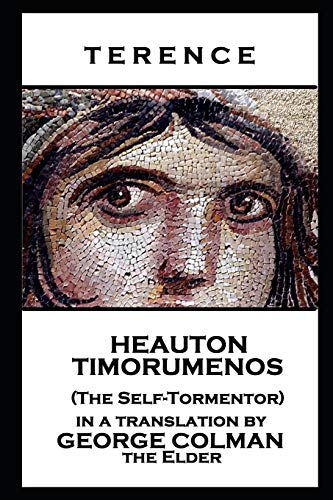
Terence - Heauton Timorumenos
TerenceTerence - Heauton Timorumenos
or to grade, review, and add to your backlog.
Description
Publius Terentius Afer is better known to us as the Roman playwright, Terence. Much of his life, especially the early part, is either unknown or has conflicting sources and accounts. His birth date is said to be either 185 BC or a decade earlier: 195 BC. His place of birth is variously listed as in, or, near Carthage, or, in Greek Italy to a woman taken to Carthage as a slave. It is suggested that he lived in the territory of the Libyan tribe that the Romans called Afri, near Carthage, before being brought to Rome as a slave. Probability suggests that it was there, in North Africa, several decades after the destruction of Carthage by the Romans in 146 BC, at the end of the Punic Wars, that Terence spent his early years. One reliable fact is that he was sold to P. Terentius Lucanus, a Roman senator, who had him educated and, impressed by his literary talents, freed him. These writing talents were to ensure his legacy as a playwright down through the millennia. His comedies, partially adapted from Greek plays of the late phases of Attic Comedy, were performed for the first time around 170-160 BC. All six of the plays he has known to have written have survived. Indeed, thanks to his simple conversational Latin, which was both entertaining and direct, Terence's works were heavily used by monasteries and convents during the Middle Ages and The Renaissance. Scribes often learned Latin through the copious copying of Terence's texts. Priests and nuns often learned to speak Latin through re-enactment of Terence's plays. Although his plays often dealt with pagan material, the quality and distinction of his language promoted the copying and preserving of his text by the church. This preservation enabled his work to influence a wide spectrum of later Western drama. When he was 25 (or 35 depending on which year of birth you ascribe too), Terence travelled to Greece but never returned. It has long been assumed that he died at some point during the journey. Of his own family nothing is known, except that he fathered a daughter and left a small but valuable estate just outside Rome. His most famous quotation reads: "Homo sum, humani nihil a me alienum puto", or "I am human, and I think nothing human is alien to me."
Community reviews
No reviews yet. Be the first to review this book.
More like this
- 50 Masterpieces you have to read before you die vol: 1
50 Masterpieces you have to read before you die vol: 1
Nikolai Gogol
- 100 Books You Must Read Before You Die
100 Books You Must Read Before You Die
Arthur Machen

100 Eternal Masterpieces of Literature #1
Aldous Huxley
- A
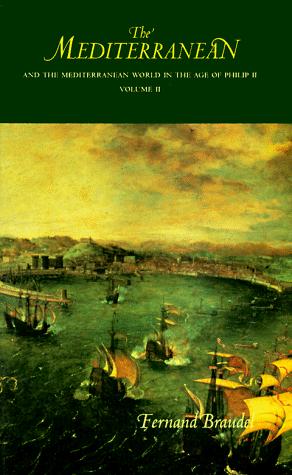
The Mediterranean and the Mediterranean World in the Age of Philip II, Volume I
Fernand Braudel
- L'Etranger (Collection Folio, 2) (French Edition) Publisher: Gallimard
L'Etranger (Collection Folio, 2) (French Edition) Publisher: Gallimard
Albert Camus
The State of Siege
Albert Camus
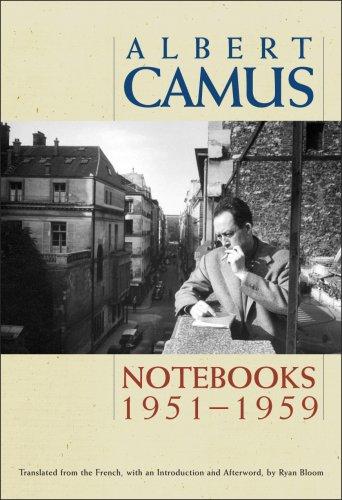
Notebooks 1951-1959
Albert Camus

Return to Tipasa
Albert Camus