

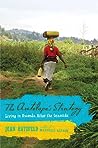
The Antelope's Strategy: Living in Rwanda After the Genocide
Jean HatzfeldThe Antelope's Strategy: Living in Rwanda After the Genocide
or to grade, review, and add to your backlog.
Description
One hot May morning in 2003, a crowd of Hutus who had participated in the genocidal killings of April 1994 in Rwanda filed out of prison and into the sunshine, singing hallelujahs, their freedom granted by presidential pardon. As they returned to their old villages, Tutsi survivors watched as the people who had killed their neighbors and families returned to the homes around them. In The Antelope's Strategy, Jean Hatzfeld returns to Rwanda to talk with both Hutus and Tutsis struggling to live side by side. We hear the voices of killers who have been released from prison or returned from exile, and Tutsi escapees who must now tolerate them as neighbors. How are they managing with the process of reconciliation? Is such a thing even possible? The enormously varied answers Hatzfeld gets suggest that little faith in true recovery survives among those who lived through the genocide. This is an astonishing exploration of the pain of memory, the nature of stoic hope, and the ineradicability of grief.
Community reviews
No reviews yet
Be the first to review this book.
More like this
 Inferno: The World at War, 1939-1945
 The Parliament of Man: The Past, Present, and Future of the United Nations
 The Bomb
 Spies in Arabia: The Great War and the Cultural Foundations of Britain's Covert Empire in the Middle East
 The War of 1812: Writings from America's Second War of Independence
 Israel Is Real: An Obsessive Quest to Understand the Jewish Nation and Its History
 Nemesis
 The Lost History of Aztec & Maya: The History, Legend, Myth and Culture of the Ancient Native Peoples of Mexico and Central America: Olmec, Maya, ... Zapotec, Toltec, Mixtec, Totonac, Aztec