

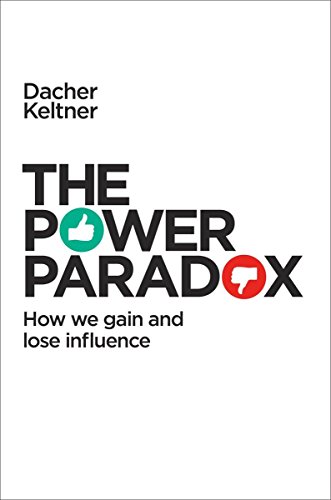
The Power Paradox: How We Gain and Lose Influence
Dacher KeltnerThe Power Paradox: How We Gain and Lose Influence
or to grade, review, and add to your backlog.
Description
It is taken for granted that power corrupts. This is reinforced culturally by everything from Machiavelli to contemporary politics. But how do we get power? And how does it change our behavior? So often, in spite of our best intentions, we lose our hard-won power. Enduring power comes from empathy and giving. Above all, power is given to us by other people. This is what all-too-often we forget, and what Dr. Keltner sets straight. This is the crux of the power paradox: by fundamentally misunderstanding the behaviors that helped us to gain power in the first place we set ourselves up to fall from power. We can't retain power because we've never understood it correctly, until now. Power isn't the capacity to act in cruel and uncaring ways; it is the ability to do good for others, expressed in daily life, and itself a good a thing. Dr. Keltner lays out exactly--in twenty original "Power Principles"-- how to retain power, why power can be a demonstrably good thing, and the terrible consequences of letting those around us languish in powerlessness.
Community reviews
No reviews yet. Be the first to review this book.
More like this
The Artist's Journey: The Wake of the Hero's Journey and the Lifelong Pursuit of Meaning
Steven Pressfield

Gifts of the Crow
John M. Marzluff
Altered Traits: Science Reveals How Meditation Changes Your Mind, Brain, and Body
Daniel Goleman

Radically Happy: A User's Guide to the Mind
Erric Solomon
A revolucao do altruismo
Matthieu Ricard

The Apology
V

Why We Believe in God(s): A Concise Guide to the Science of Faith
J. Anderson Thomson
Chicken Soup for the Soul: Think Positive, Live Happy: 101 Stories about Creating Your Best Life
Amy Newmark