

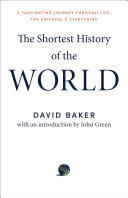
The Shortest History of the World
David BakerThe Shortest History of the World
or to grade, review, and add to your backlog.
Description
A fascinating journey through life, the universe and everything How did time begin? What conditions led to humans evolving on Earth? Will we survive the Anthropocene? And is it really true that we’re all made from stars? The Shortest History of the World follows the continuum of historical change in the cosmos – from the Big Bang, through the evolution of life, to human history. Combining knowledge from chemistry, biology and physics with insights from the social sciences and humanities, The Shortest History of the World takes a bird’s-eye view of 13.8 billion years. In this compelling and revealing book, David Baker traces the rise of complexity in the cosmos, from the first atoms to the first life and then to humans and the things we have made. He shows us how simple clumps of hydrogen gas transformed into complex human societies. This approach – Big History – allows us to see beyond the chaos of human affairs to the overall trajectory. Finally, Baker looks at the dramatic and sudden changes we’re making to our planet and its biosphere and how history hints at what might come next. ‘We have been the dominant species on this planet for the briefest flicker of our history, and until we understand that, we can’t reckon meaningfully with the dramatic and sudden changes we’re making to our planet and its biosphere.’ —John Green
Community reviews
No reviews yet
Be the first to review this book.
More like this
 The Bronze Lie: Shattering the Myth of Spartan Warrior Supremacy
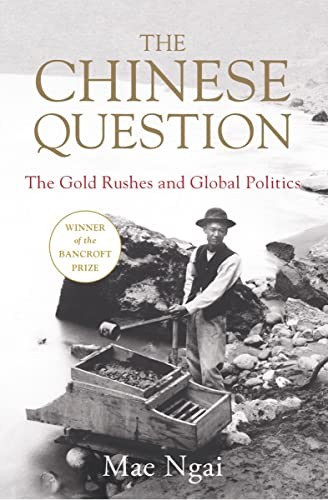 The Chinese Question: The Gold Rushes and Global Politics
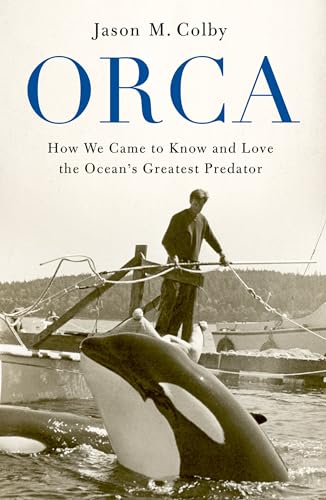 Orca: How We Came to Know and Love the Ocean's Greatest Predator
 Steel Lobsters: Crown, Commonwealth, and the Last Knights In England
 The Killing Ground: A Biography of Thermopylae
 La guerra secreta: Espias, codigos y guerrillas, 1939-1945
 An Illustrated History of Islam: The Story of Islamic Religion, Culture and Civilization, from the Time of the Prophet to the Modern Day, Shown in Ove
 The Business of Empire: United Fruit, Race, and U.S. Expansion in Central America