

An Exceptional Game
 Adam Milton
and grade a few things to see how Adam Milton’s taste matches yours.
I did not like Dishonored when it was first released. Coming out shortly before Bioshock Infinite, it was not the game I wanted it to be. It wasn’t easy or forgiving—no, it was an immersive sim sold to me as a placeholder for Infinite. I played for a few weeks, maybe, and then stopped, though I promised myself that I would return at some point.
It wasn’t until nine years later—after a sequel and three DLCs (two for the original game and one for the sequel)—that I finally went back. With expectations gone and maturity in their stead, Dishonored found me, and I discovered a top‑ten game of my life.
I love Dishonored. I love it. About once every 18 months to two years I start the series over again, and I always begin here.
Dishonored is a first‑person immersive simulation built on a limited RPG system. Like the immersive sims that came before it—System Shock, Bioshock, Deus Ex, and so on—Dishonored strives to create a highly interactive, detailed world where the player can achieve objectives through a wide variety of actions, limited only by the setting. And the setting itself is something to behold.
The game is set in the steampunk city of Dunwall. You are Corvo, the royal protector—a mix of bodyguard, assassin, and errand boy. As a master swordsman, you are tasked with protecting Jessamine Kaldwin and her daughter Emily. You ultimately fail: Jessamine is assassinated, Emily is kidnapped, and Corvo spends six months in a jail where he is tortured. He is broken out by the “loyalists,” and that is where the game begins.
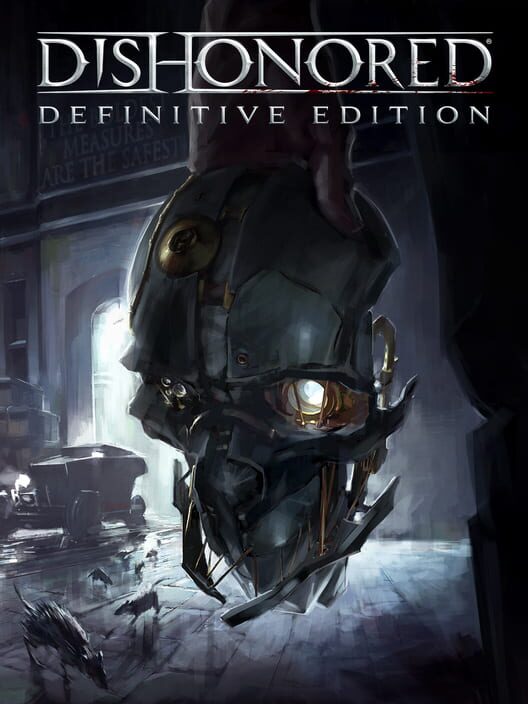
The first thing that stands out about Dishonored is its art design, which is second to none. The world looks like a living painting inspired by both the Renaissance and Romanticism movements. Dunwall feels like a 19th‑century steampunk London, complete with plague‑ridden rats, hard liquor, and early‑industrial gloom. The atmosphere is chilly and harsh.
The level design has peaks and valleys. Some missions are amazing; others are overly long or visually bland. After you’ve seen one office or building, the rest tend to blend together. On the other hand, the missions vary widely in tone and objective, keeping the experience fresh.
Dishonored rewards players who explore. Detailed notes, journal excerpts, books, and overheard conversations flesh out the world and give clues about what to do next. Did someone hide treasure in this building? Does a doctor abuse his servants? Those treasures might be runes that upgrade your magical abilities, money for resources, or blueprints for equipment. You are also offered alternative ways to eliminate your target. For example, you can brand a religious leader as a heretic, turning him into an outcast, and spare his life.
Why spare his life? The more you kill, the more Chaos you add, and the worse the world becomes. Dunwall is already ravaged by a rat plague; killing soldiers and city guards only aggravates the outbreak. More kills mean more “weepers”—plague victims stumbling about in agony—more aggressive guards, larger numbers of enemies, and larger rat swarms. You can avoid a high‑Chaos ending by killing as little as possible.
This is where Dishonored really shines. Its morality, or Chaos, system isn’t as sophisticated as modern games, but it is still robust. Accidental kills are possible, and the game allows a few deaths on a low‑Chaos run. Dropping an unconscious body in the wrong area may count as a kill, but it won’t trigger the worst ending. In my first play through I ignored alternate paths, made a beeline for the target, deliberately killed him, and left.
Each level tasks you with eliminating an enemy who helped either assassinate Jessamine or support the coup that follows. You are dropped off at a location on the map, and it is up to you how to navigate to your target. Without giving too much away, your first target is a religious leader. You could simply go to his location and kill him, but Dishonored always offers another way.
The game play is more than standard FPS fare. Early in the game you gain access to a simple magic system from a chaotic‑neutral god called the Outsider. You can see through walls, teleport from place to place, and even throw people across a room or off a building with a gust of wind. These abilities add verticality and dynamism, opening up new routes and movement options.
The magic system is well balanced in terms of gameplay, though its moral implications are blunt. You are powerful, but enemies and traps can still kill you if you are reckless. My biggest gripe is that most powers are violent—throwing people, summoning rats to eat them—or neutral, providing health or mobility. I would have liked a power equivalent to a sleep dart.
Corvo also wields a sword and a dart gun that can knock enemies unconscious or kill them. Swordplay feels a little awkward at first, but you quickly discover a style that works for you. The pistol functions more like a blunderbuss: it starts out inaccurate and is of limited use in a non‑lethal playthrough.
I have never done a full high‑Chaos run; I have played single missions that way. While the low‑Chaos, non‑lethal version offers a great challenge, the violent high‑Chaos version is a riot. There is little to stop you from imposing your own brand of justice on an already cruel world.
Dishonored is an excellent example of world‑building, immersion, and gameplay. You are rewarded for your choices and for committing to them. The game lets you invest as much—or as little—as you want.
Comments
to leave a comment
No comments yet