

An Exercise in Expectation Management
 Electric Sheep
and grade a few things to see how Electric Sheep’s taste matches yours.
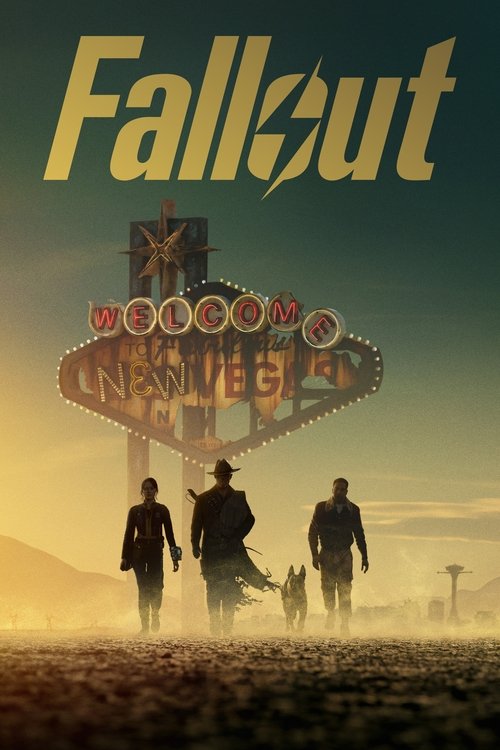
Coming off the heels of a surprisingly successful season one, Fallout set its sights on the Mojave. A surprising but exciting development in the show, spending time in New Vegas was a seemingly ambitious goal. The game which created season two’s setting has a history of cult-like fanaticism and contention amongst the fanbase. As one of “those” Fallout fans (the fans who claim rightful New Vegas superiority over all other Fallout fans), I badly wanted this season to be a success despite my apprehension about Bethesda’s ability to execute.
Fallout: New Vegas sits in a weird place in the franchise’s catalogue. Given the fact that it was developed by Obsidian rather than Bethesda, and that it launched with the technical issues you’d expect from a rushed 18-month development cycle, New Vegas has been the redheaded stepchild of the game series. Bethesda has hardly acknowledged it over the years, despite gaining a cult following among fans. While I’m not here to discuss why New Vegas is the best thing to come out of the Fallout franchise (it is), I do think it’s important to at least address how its history plays a part in how the gaming fans might assess the quality of this season.
Season one was, for all intents and purposes, a pretty good show. Any time someone tries to adapt a video game to another medium, there is a profound lowering of expectations, as there is not exactly a rich history of that working out. So when it turned out to be a pretty fun and accurate representation of the themes and vibe of the Fallout world, it was exciting to see where it would go. You could tell that the first season was created without any real expectation of getting renewed. There was a tight contiguous story with a handful of characters. While not a deep lore exploration, it was an entertaining Bethesda “theme park” experience, as we have come to expect from their games.
This brings us now to season two and New Vegas. Again, as one of “those” fans, I was honestly just happy that Bethesda acknowledged its existence at all, let alone left the possibility open for us to explore it in the show. The bar here was pretty low. I was just happy to be invited to the party.
Unfortunately, taking on New Vegas is a bit of a tough task. There are a number of big player factions in the game’s story, on top of even more micro factions, all with their own history and motivations, which help build out a vibrant and interesting world. Given only eight hours of total runtime, there is a lot of ground to cover, so dialing in exactly what to focus on is integral to the success of the season.
Herein lies all my complaints.
Without getting into any of the arguments about things that were retconned in Fallout lore, or any smarmy remarks about how Bethesda treats its IP in general, the story writing itself is a bit of a mess.
We continue down the “hero’s journey” of Lucy and co. from the previous season as they venture through the Mojave and eventually to Vegas. At this point much of the story we were tracking in the first season has splintered off into multiple origin stories: Lucy’s relationship with her father and the vaults, Cooper Howard’s search for his family and his role in the events leading up to the bombs, Max’s upbringing and maneuvering within the Brotherhood, all on top of the story of the vault dwellers themselves who were left behind. This all takes a considerate amount of time to get through if the goal is to tell a story of “how did we get here?”, let alone tying it into “what do we do now?”. This means there is little left for the place they are actually navigating presently.
And while admittedly New Vegas is very fun aesthetically as set piece, this ends up being all that it becomes in the show. Rather than moving through a living, breathing city in the middle of a desert, we get what amounts to a Disney World set with some extras walking around it.
We receive a cursory overview of the main factions (the NCR, Legion, and Mr. House) but spend no time whatsoever on their stories beyond displaying a struggle for power to control the city. Even that characterization is a generous one, as the show barely mentions the NCR until the final hour of the season. The show moves through the Mojave, Freeside and Vegas as though they are merely roadside window dressing, sprinkling in some memes and inside jokes for the gamer fans - which feel less like tips of the hat and more “how do you do fellow kids?” moments.
It’s not all terrible, despite my ranting. The things the show does well, it does very well. Just like the season before it, it captures the goofy and graphic tone of Fallout. If there is one thing that Bethesda seems to understand, despite all else, it’s the vibe and aesthetic. It should also go without saying that Walton Goggins and Ella Purnell continue carrying the show on their backs. Lucy and Cooper are charismatic and entertaining in every scene they’re in.
Going into this season I knew what I was getting into. It makes it difficult to rest on a coherent singular opinion. On one hand I knew Bethesda wasn’t going to do New Vegas any justice. I also knew that their whole schtick with Fallout has been “goofy violent theme park”, wearing the political philosophies of the franchise as a costume more than attempting to communicate a sincere story. On the other hand, I never thought I’d see any adaptations or continuations for New Vegas ever again. In that regard I was just happy to get this much. Season two was an exercise in managing expectations. I didn’t expect much. I didn’t get much. But it was still a little fun that it was made at all.
Comments
to leave a comment
No comments yet