

A Subtle Masterpiece
 MonkeyDPoopy
and grade a few things to see how MonkeyDPoopy’s taste matches yours.
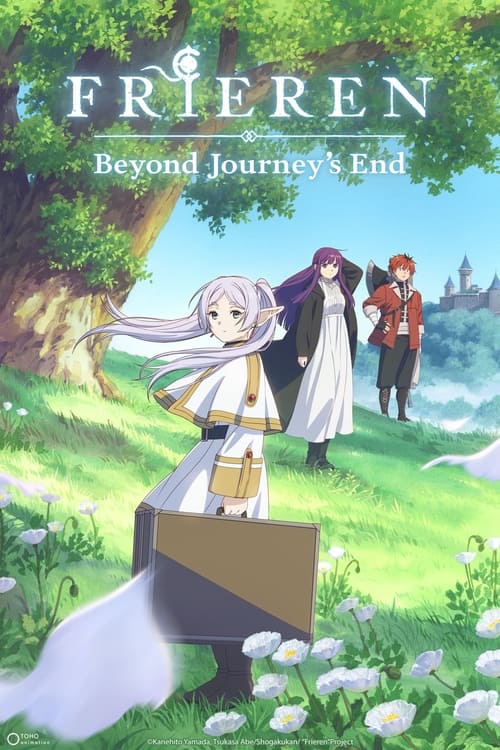
Frieren: Beyond Journey’s End is genuinely a masterpiece, and I think what makes it so special is just how subtle and intentional its writing is. It's a story that doesn't feel the need to constantly remind you how deep it is. Instead, it trusts the audience to pick up on the smallest details, whether it's a passing conversation, a character's expression, or something seemingly insignificant that doesn't reveal its importance until much later. There's so much meaning hidden in moments that other anime would probably overlook. It's the kind of storytelling that makes you appreciate the series even more when you revisit it because you start noticing just how carefully everything was put together.
By far my favorite blink and you miss it moments in the series is when Stark sits in front of the Hero's Sword of the Prophecy but never attempts to pull it from the stone. In practically any other fantasy story, this would be the perfect opportunity to give an epic moment to one of the main characters. Instead, Stark simply sits there as Frieren tells the story, and then the episode just moves on as he glances at the sword one last time. We don't know whether he felt unworthy of attempting it or whether he simply had no desire to prove himself, because the series doesn't feel the need to tell us, he sat there staring at the sword the same as us, the audience. And that's what makes it so brilliant. Stark has spent much of his journey struggling with insecurity and self-doubt, yet here he is, seemingly becoming more comfortable with who he is. He doesn't need a prophecy or legendary sword to validate his worth. What's even more beautiful is that we, as the audience, know Stark is one of the kindest and most capable characters in the series. For all we know, he might have actually been able to pull the sword. But we'll never know, because we don't need to. And perhaps, neither does Stark. That's the beauty of Frieren's writing: sometimes the most meaningful character development comes not from what a character does, but from what they choose not to do.
There's also something beautiful about how Frieren approaches time, memory, and regret. It takes the idea of an almost immortal character and uses it to explore something deeply human: how easily we take the time we have with others for granted. The tragedy isn't simply that people die, but that we sometimes don't understand how much they meant to us until they're gone. And yet, despite those melancholic themes, the series never feels overwhelmingly depressing. There's an underlying warmth and optimism in the idea that it's never too late to learn, grow, and form meaningful connections.
One thing I love is that the series rarely forces its emotional moments. It doesn't need overly dramatic speeches, excessive exposition, or characters constantly explaining how they feel. Sometimes all it takes is a brief flashback, a familiar gesture, or even something like Frieren smiling while realizing the significance of something from decades ago. The emotional weight comes from understanding what isn't being said. Even the humor and quieter slice-of-life moments contribute to the characterization rather than feeling like distractions from the story.
One of my favorite things about Frieren is also how it completely flips traditional fantasy and anime character tropes on their heads. The legendary hero's journey, which would normally be the entire story, is already over before the series even begins. Rather than focusing on defeating the Demon King or saving the world, it explores what happens afterward and what those adventures actually meant to the people who experienced them. Even the characters themselves challenge expectations. Frieren is an incredibly powerful mage, but her greatest struggle isn't overcoming some stronger enemy; it's learning to understand people, emotions, and the passage of time. Characters who initially seem like familiar archetypes gradually reveal layers of personality that make them feel incredibly human. A drunken priest, a vain hero, a cowardly warrior, are all examples of how the story subverts our expectations to serve to us unique and interesting characters.
For instance Himmel is probably my favorite example of the series subverting character archetypes. On the surface, he appears to be the stereotypical heroic, handsome, somewhat narcissistic fantasy protagonist. He constantly poses for statues, talks about how handsome he is, and seems obsessed with leaving behind monuments of himself. In practically any other series, this would be a running joke about a hero's inflated ego. But Frieren gradually reveals something far more meaningful. Himmel wanted statues built because he understood that Frieren would outlive everyone who knew them. He wanted to leave behind physical reminders of their adventures so that she would never have to feel completely alone. Something initially presented as vanity is eventually revealed to be an incredibly selfless expression of love. That kind of subtle recontextualization is exactly why I think the writing is phenomenal.
I genuinely adore Frieren because it understands that great storytelling doesn't always have to be loud or complicated. Its brilliance comes from its restraint, its attention to detail, and its ability to make the smallest moments feel monumental. Nearly every character interaction serves a purpose, and the way the series quietly subverts expectations without drawing attention to itself is something I wish more stories would embrace. It's rare to find a series that feels this emotionally mature while still maintaining such a genuine sense of wonder and adventure. The series constantly rewards viewers for paying attention, and its flashbacks aren't simply there to provide exposition. They actively change the meaning of what we're watching in the present.
Frieren isn't just one of my favorite anime. It's one of my favorite examples of storytelling, period.
Comments
to leave a comment
No comments yet