

Review of Mass Effect 2 by Adam Milton
 Adam MiltonNovember 1, 20265 viewsAdam Milton on games. Graded 4 other games by BioWare, averaging A · 86 full reviews published
and grade a few things to see how Adam Milton’s taste matches yours.
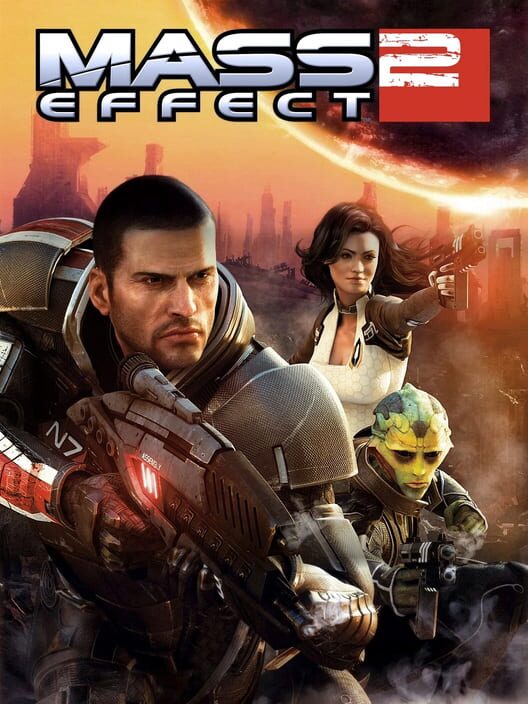
Mass Effect 2 Review
I was sort of in disbelief when Mass Effect 2 came out. Honestly. I had spent the previous three or so years falling in love with the first game. Despite all the time spent returning to the Citadel, Feros, and Noveria, I didn't really think they would release a sequel. And if they did, I didn't think it would be as fun. Even if it was, I wasn't sure it could live up to the promise of the series.
They did. It was. And the promises were kept.
Mass Effect 2 lived up to the hype and the promises. It is not my favorite Mass Effect game, but my love for it is no less incandescent. The best comparison I have for Mass Effect 2 is Aliens, the 1986 James Cameron movie. What they managed to do was shift the genre of the series from gothic horror to an action thriller with heavy horror elements. Mass Effect 2 took the series from a space adventure with cosmic horror elements and added a heist-like, gather-the-crew mechanic to the game. That may seem like a wild shift, but in reality, it worked for Mass Effect for one simple reason.
Mass Effect worked best when you leaned into the story elements of the game. You opened different side quests and had deep, engaging lore explained to you if you took the time to speak to your squad. You learned about Garrus and his history working for Citadel Security, aka C-Sec. Wrex and his family history. Tali and her pilgrimage through the universe. When you learn about their histories, new missions or new perspectives on existing missions open up. Garrus has been hunting an evil scientist across the galaxy. You learn about Wrex's family history and Tali's desire to send data about the Geth to her people. The characters in Mass Effect are what take the game from really good to excellent. And Mass Effect 2 leans into what the franchise does best.
The game starts off with a bold new direction. The Normandy, your crew's home and ship, is destroyed, and Shepard is lost. He is recovered and rebuilt by Cerberus, a human-first terrorist group you encountered during the first game. They convince you to work with them as human colonies are being attacked by a shadowy force named the Collectors. They provide you with a new ship, a bigger and more luxurious version of the Normandy. Tasked with stopping the Collectors and given the resources and dossiers on the people who can help you, the game starts in earnest.
Stopping the Collectors is simple, but not easy. They are a mystery to most of the galaxy, as they live and work behind a Mass Relay (this universe's means of overcoming the vast distances of time and space). Getting through that relay is going to be tough, and returning is going to be harder. You spend most of the game attempting to gather your team and resources because the game frequently reminds you that your mission to stop the Collectors could be a suicide mission if you aren't careful.
The narrative resists a "get the team back together" moment and instead takes this opportunity to introduce new characters. Though some fan favorites make cameos, most of your squad is new. Mercenaries, prisoners, scientists, assassins, agents, and more round out your team. Each one has a backstory, and with a backstory comes a mission. Some are better than others, but the missions themselves are varied enough to never get boring.
Taking the time to talk to each one is more than just checking a box. The voice acting and their personal histories are fascinating, and if you talk to them enough and complete their missions, you gain their loyalty. That loyalty is what will help you during the final mission. It allows you to retrofit the Normandy with better weapons and defenses, on top of making it more likely for your crew to survive.
There is no sure thing, though. You can have all the right equipment and a loyal team, but the choices you make during the final battle will determine who lives and who doesn't. It's a smart mechanic that adds a level of tension to the final mission. At least once, I found a character I had grown to love dead, and I restarted the game that same day.
Mass Effect 2 really does avoid just "replaying the hits," so to speak. We visit the Citadel, but instead of the Presidium, we see the Wards, the places people live. We get new locations, enemies, and alien races. Omega, at first glance, might be understood as the dark Citadel, but it becomes a space all its own. While the Citadel is the center of the galaxy, the goal for a lot of people, Omega is the place where you end up or get stuck. This is a different side of the galaxy, no more dangerous, but with less pretense. Some of the new locations were places I honestly never thought we would get to see in the game. We spent time on the bombed-out Krogan homeworld, Tuchanka, a glossy Asari world, and the Quarian Migrant Fleet. Both felt appropriate to the universe and made sense as the homes of their respective species.
As a whole, Mass Effect 2 feels no less or more dangerous, but the world is seedier and its denizens are blasé about the violence, cruelty, and injustices around them. The sun-scorched landscape of Tuchanka, the packed and buzzing halls and clubs of Omega, and the day-to-day life of the Citadel Wards all contribute to that feeling. Your authority no longer extends from the Council and civilized space, but instead comes from your willingness to exist in these dark, people-worn spaces and fight the good fight.
Some game mechanics have also changed. The hacking minigames are closer to children's games of memory and matching patterns. Combat is more fluid and you can more quickly bound from cover and avoid attacks, Your leveling system is simplified. Mass Effect leaned more heavily into RPG mechanics in terms of character development and powers. In Mass Effect 2, each level requires the same number of points to advance. The thrill of leveling up is gone thanks to this more streamlined version as it feels like you have less granular control over how your characters develop.
The most interesting mechanic introduced is the interrupt system. In the middle of a dialogue sequence, you can be given a choice, either Renegade or Paragon depending on the context, to do something that will radically change the outcome of the conversation and situation. Injure an engineer, giving you an advantage in combat. Kick a smug mercenary out of a window. Save someone's life. While the Paragon and Renegade action and dialogue decisions still affect your Shepard and the world around you, in this game even your good deeds feel a little dirty.
The combat is frenzied and fast, but a little easier to manage than in the previous game. Your powers pack a punch, and there is more clarity, but still the same amount of chaos. This time around, to avoid people staying put and picking off enemies, there is a thermal clip magazine system. Gone are the infinite-ammo weapons and brutal mid-battle cooldowns.
Instead of waves of Geth, cloned Krogan, or Husks, with the occasional soldier thrown in, you will primarily be fighting mercenaries. Each group is color-coded and has different aliens fighting for it. The Blood Pack, Blue Suns, and Eclipse all use different combinations of engineers, vanguards, biotics, soldiers, and infiltrators.
The Collectors are humanoid bug creatures with organic weapons and devastating attacks. They are among the most difficult enemies to face in the game. Scions and Praetorians are both Collector enemy types made from fused human corpses. They are impossible to ignore, and despite your best efforts, they can easily overwhelm you. More so than the previous game you have to use your team in battle as the enemies are deadlier and fight better as a team.
To gather resources to upgrade equipment and your ship, you scan planets. If it weren't for the fantastic score, composed primarily by Jack Wall, alongside Sam Hulick, David Kates, and Jimmy Hinson, this would have been unbearable. If I'm being fair, this takes the place of driving around in the Mako, looking for resources and other trinkets on a planet's surface. This time, you scan a planet, find one of four resources, and send a probe. You move a small Normandy icon across the map and find planets or fuel stations to buy more fuel or probes. In a game characterized by its dizzying highs, this is not so much a low as a deliberate pace regulator, designed to slow the game down a tick.
With all that said, I am leaving the best parts of Mass Effect 2 for last: how it all comes together. The places we never thought we would see, the characters we fell in love with, and the mysteries we uncovered. All of that is set against a darker, harsher version of a universe we grew to love.
Mass Effect 2 is gaming excellence and is easily one of the best games I have ever played. I just wish I could erase my memory and play it all over again for the first time.
Also reviewed by Electric SheepA
Comments
to leave a comment
No comments yet