

or to grade, review, and add to your backlog.
Description
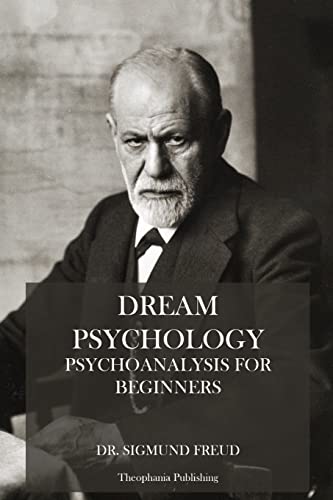
Sigmund Freud's (1856-1939) attitude toward dream study was that of a statistician who does not know, and has no means of foreseeing, what conclusions will be forced on him by the information he is gathering, but who is fully prepared to accept those unavoidable conclusions. This was indeed a novel way in psychology... Five facts of first magnitude were made obvious to the world by his interpretation of dreams. First of all, Freud pointed out a constant connection between some part of every dream and some detail of the dreamer's life during the previous waking state... Secondly, Freud, after studying the dreamer's life and modes of thought, after noting down all his mannerisms and the apparently insignificant details of his conduct which reveal his secret thoughts, came to the conclusion that there was in every dream the attempted or successful gratification of some wish, conscious or unconscious. Thirdly, he proved that many of our dream visions are symbolical, which causes us to consider them as absurd and unintelligible; the universality of those symbols, however, makes them very transparent to the trained observer. Fourthly, Freud showed that sexual desires play an enormous part in our unconscious, a part which puritanical hypocrisy has always tried to minimize, if not to ignore entirely. Finally, Freud established a direct connection between dreams and insanity, between the symbolic visions of our sleep and the symbolic actions of the mentally deranged. Andr Tridon (1920)
Community reviews
No reviews yet
Be the first to review this book.
More like this
- The Mindful Way through Depression: Freeing Yourself from Chronic UnhappinessBook

- El erotismoBook

- The Penguin Book of American Short StoriesBook

- The Ego and the IdBook

- Massenpsychologie und Ich-AnalyseBook

- Dream Psychology: Psychoanalysis for BeginnersBook
- A General Introduction to PsychoanalysisBook

- The UnconsciousBook