

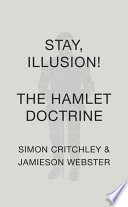
Stay, Illusion!: The Hamlet Doctrine
Simon Critchley, Jamieson WebsterStay, Illusion!: The Hamlet Doctrine
or to grade, review, and add to your backlog.
Description
The figure of Hamlet haunts our culture like the ghost haunts Shakespeare’s melancholy Dane. Arguably, no literary work is more familiar to us. Everyone knows at least six words from Hamlet, and most people know many more. Yet the play—Shakespeare’s longest—is more than “passing strange,” and it becomes even more complex when considered closely. Reading Hamlet alongside other writers, philosophers, and psychoanalysts—Carl Schmitt, Walter Benjamin, Freud, Lacan, Nietzsche, Melville, and Joyce—Simon Critchley and Jamieson Webster go in search of a particularly modern drama that is as much about ourselves as it is a product of Shakespeare’s imagination. They also offer a startling interpretation of the action onstage: it is structured around “nothing”—or, in the enigmatic words of the player queen, “it nothing must.” From the illusion of theater and the spectacle of statecraft to the psychological interplay of inhibition and emotion, Hamlet discloses the modern paradox of our lives: how thought and action seem to pull against each other, the one annulling the possibility of the other. As a counterweight to Hamlet’s melancholy paralysis, Ophelia emerges as the play’s true hero. In her madness, she lives the love of which Hamlet is incapable. Avoiding the customary clichés about the timelessness of the Bard, Critchley and Webster show the timely power of Hamlet to cast light on the intractable dilemmas of human existence in a world that is rotten and out of joint.
Community reviews
No reviews yet. Be the first to review this book.
More like this

Goliath
Scott Westerfeld

Pagan Saints in Middle-earth
Tom Shippey

Jews and Words
Amos Oz
Through the Window: Seventeen Essays
Julian Barnes
La cospirazione contro la razza umana
Thomas Ligotti
Filthy Talk for Troubled Times and Other Plays
Neil LaBute
El fantasma en el libro
Javier Calvo
Firefly Revisited: Essays on Joss Whedon's Classic Series
Michael Goodrum