

A Perfect Blend
 Adam Milton
and grade a few things to see how Adam Milton’s taste matches yours.
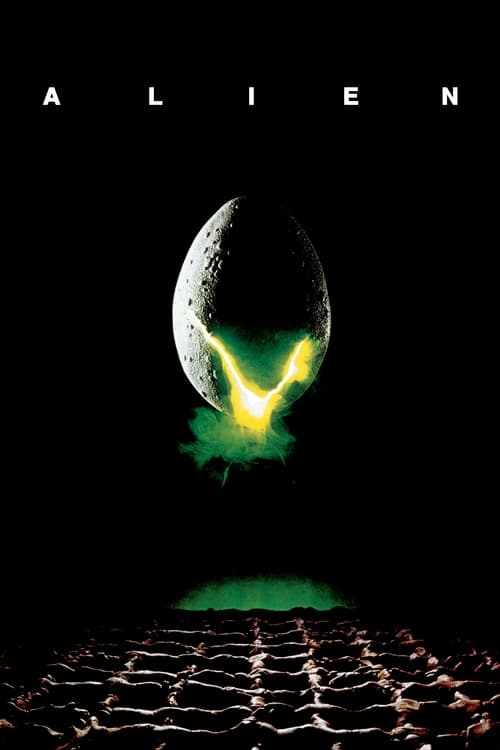
If Ridley Scott’s Alien were just science fiction, it would rank among the very best in cinematic history. If it were purely horror, it would still stand among the best. It’s the confluence of these sister genres that gives Alien a depth rarely matched.
Alien begins in a strangely minimalist way. Simple white text establishes the setting and crew, accompanied by Jerry Goldsmith’s haunting score. From there, we’re taken on a slow tour of the ship—no context, no explanation. We see long, sterile hallways, a dining area, ladders, and the cockpit. The entire vessel is a textbook example of “cassette futurism.” Rarely do I dwell on set design, but the Nostromo feels like a character in its own right—just as vital as any crew member or the Xenomorph itself. The setting grounds the film, lending realism to a genre often defined by speculation and flights of fancy.
Another unusual aspect of Alien is the absence of an immediately obvious main character. You might say, “Clearly it’s Sigourney Weaver,” the matriarch of American sci-fi—but I’d ask when you last watched the film without the context of its sequels or expanded universe. Watch it again. The film gives her no special treatment—no lingering shots, no extended backstory—no more than Dallas, Parker, Kane, Lambert, Brett, or Ash. In a lesser film, Dallas might have been the hero, but his fate is a brilliant subversion and one of the best scenes in movie history.
Weaver is supported by an outstanding ensemble cast: Tom Skerritt, Yaphet Kotto, John Hurt, Veronica Cartwright, Harry Dean Stanton, and Ian Holm. They feel like seasoned professionals—people who have worked together or at least moved in the same circles for years.
You’d be mistaken to think of this film as merely a slasher in space. As a narrative, it shares DNA with gothic horror—the oppressive setting, buried secrets, and intense isolation. While that comparison holds, I also see the influence of Lovecraftian horror: the confrontation with the unknown and unknowable, and the cold indifference of space itself. That blend of horror subgenres on top of science fiction is what makes Alien, as a standalone film, so compelling.
The alien itself is iconic for a reason as the design is nothing short of inspired. It moves with a slow, deliberate confidence that is deeply unsettling—you can’t look away. Even when you only glimpse parts of it in low light, you immediately recognize it as a predator devoid of empathy despite being so...alien.
Alien is excellent, and absolutely worth your time.
Comments
to leave a comment
No comments yet