

A Knife in the Night
 Adam Milton
and grade a few things to see how Adam Milton’s taste matches yours.
The Knife of Dunwall might be the best DLC I have ever played—not the best for Dishonored 1, not the best in the entire Dishonored series, but the best DLC I have ever experienced.
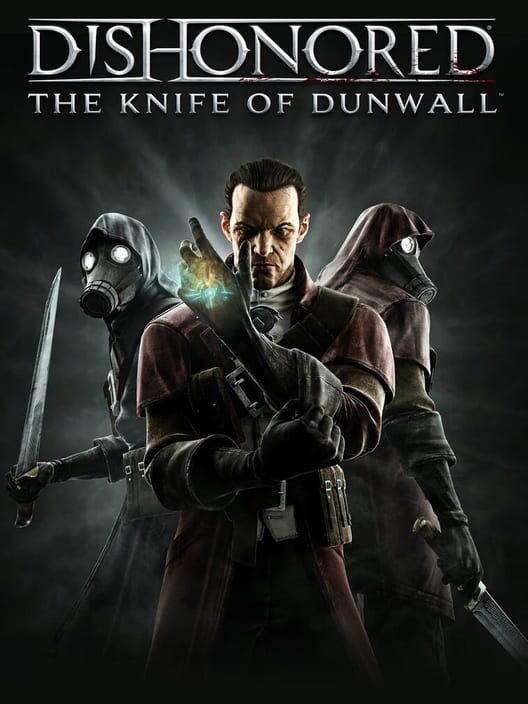
What the Knife of Dunwall does is flesh out the world by telling a parallel story from the point of view of the antagonist who set the events in motion. It also adds gameplay elements that make returning to this world a whole lot of fun.
Daud was the assassin who killed Empress Jessamine Kaldwin. He led his gang, the Whalers, across the roofs of the royal tower to carry out the murder. The opening cinematic tells that story, narrated by Daud himself. Dripping with regret, he tries to justify what he did. Voiced by Michael Madsen, Daud is more than an assassin; he is a man haunted by his action and by what it did to the city.
If you remember the first game, you know the Outsider has taken an interest in Daud, granting him the same basic powers that Corvo possessed. The Outsider has given Daud a name—Delilah—and, in Daud’s own words, “a mystery I cannot abide.” That narration and Madsen’s voice set the tone for this DLC. It feels like a classic detective story, with Daud as the gumshoe chasing a mystery just beyond his understanding. Having the game’s protagonist speak adds a fresh element: Corvo was an empty vessel onto which players could project any emotion or justification, whereas Daud is a remorseful man searching for meaning.
There are no revolutionary graphical upgrades, but the DLC introduces new character models and locations. In just three missions you travel from a riverside slaughterhouse, to a legal district, and finally back to the flooded district. The flooded district is the same one from the first game.
The slaughterhouse features butchers, hulking men in butchers smocks, wearing face guards and caring two handed saws, round blades spinning. They are the most dangerous enemy in the DLC. They are heavily armed and their saw gives them a ranged attack as they can throw sparks and chucks of metal from their saw. They aren't fast but they will hunt you diligently if they see you.
The Slaughterhouse and Legal districts are both outstanding. The former is bleak and wet; you can practically smell the meat, blood, and oil seeping into the ground, buildings, and people. The Legal district, by contrast, is cold and brimming with money—a place where the wealthy feel protected. Subtle themes of class struggle run throughout. Daud, born to a witch and never wealthy, gains power by serving the wealthiest murderous desires. Workers at the slaughterhouse are brutalized by butchers and imprisoned, while the Legal district is patrolled by city guards who protect lawyers and other professionals from the plague and the gangs that stalk the city. These elements existed in the base game but were never so directly tied to the story.
The final level is a return to the Whaler's base of operations but this time it is as the Overseers attack. This is fun as you can see the conflict in real time as opposed to Corvo only seeing the aftermath in the 'Flooded District' level.
Another improvement is the expanded choice system. You have far more latitude in how to eliminate targets—provided you explore each level thoroughly. You can simply kill the cruel industrialist, blow up his factory, or stab him. You could also pack him into a crate and send him to the far reaches of the empire after extracting all the information you need. You can also work with his rival to improve the lives of his workers or set the workers free so that when you destroy the factory the collateral damage is reduced, Each choice leaves a tangible impact on the world.
Perhaps the biggest gameplay enhancement is the new and upgraded powers. Blink was already ingenious, but in Knife of Dunwall time stops while Daud remains stationary, allowing you to jump off a ledge, use Blink to hang in mid‑air, and plan your next move. This add range to the daring player. Daud can also summon other assassins from his gang, turning the tide of battle if you play more aggressively. My favorite new ability is Pull, which lets you grab objects from a distance. Pick-pocketing keys or supplies has never been easier.
Because you are Daud, master assassin, luminary of the Dunwall underworld, you can arrange for favors at the start of each mission. You can be given the location of a rune, extra supplies of blueprints to new equipment. This is a fun touch that allows you to tip the scale, so to speak, even more in your favor.
It is hard to say that this DLC is objectively better than the original Dishonored, but I enjoyed it more. With deeper choices and consequences, refined supernatural abilities, and fresh locations, The Knife of Dunwall is more than worth your time and feels like a necessary addition to the gameplay experience.
Comments
to leave a comment
No comments yet