

Emotions for Rent by Hour
 Electric SheepMarch 29, 2026460 views
and grade a few things to see how Electric Sheep’s taste matches yours.
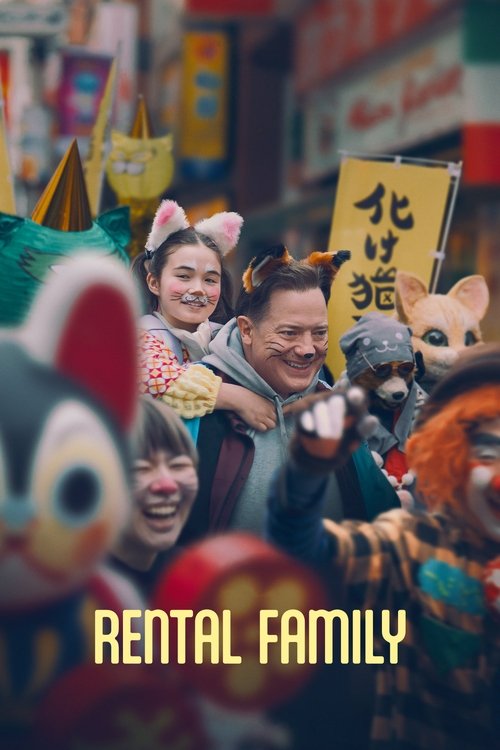
Rental Family raises poignant questions about the commodification of loneliness, the impact of genuine connection, and what it means to be a friend, family, lover, or community - questions which are ultimately glossed over and decidedly not addressed with any real conviction.
The film follows Phillip (Brendan Fraser) as a struggling American actor living in Japan. His struggles lead him to take a job with an agency which provides professional surrogates for people who have been socially dispossessed for one reason or another. Clients hire actors from this agency to fill roles in their lives (friends, family, etc.). The main story centers on two clients for Phillip: a young girl in need of a stand-in father to get into a school, and an old dementia-addled actor who needs to feel remembered at the end of his life.
These stories are warm and compelling. Brendan Fraser brings the signature earnest charm audiences have come to expect from him over the years. The supporting cast members are no slouches either, all working together to help the audience truly connect with the characters. The writing feels heartfelt and sincere, exploring a full spectrum of emotions in an organic way. On its face, Rental Family is a genuine tear-jerker.
Unfortunately, there is one glaring issue: the movie is intently focused on the trees while ignoring the forest entirely.
We spend so much time watching individual characters navigate this cynical business and seeing how it impacts people both positively and negatively, yet the movie has very little to say about it by the end. The film does explicitly acknowledge the repressive social conventions which cause people to seek out these services; we are confronted with this immediately to set up the premise. The narrative even presents the service as a net good for society. However, throughout the runtime, we are simultaneously shown the ways the agency causes genuine harm by selling lies destined to be exposed.
This dissonance is exacerbated by the fact that, by the end of the movie, the characters have seemingly learned important lessons, yet the agency continues to operate exactly as it did before. What are we supposed to take from this? While the individual stories had something to say about the human experience, what good does it do when those stories are wrapped by a narrative that seems completely uninterested in tackling meaningful change?
Sure, one could argue it would be unfair to expect a handful of people to change all of society. But that retort falls on the fact that rather than opting to go out and learn to be pillars of their communities, the characters decide to double down on the cynicism of profiting from isolation. It is a solution that, at best, provides a Band-Aid for a bullet wound, and at worst, plays directly into the issue itself. How can a film point out the pervasive and pernicious atomization of community in the modern world, and simultaneously decide that the right answer is a venture business designed to profit from it? This one glaring sidestep manages to suck all the emotional goodwill out of the room by the time the credits roll.
While it delivers emotionally compelling performances, Rental Family ultimately goes the way of its namesake agency: merely leasing us a human experience and leaving us empty again once our time is up.
Comments6
to leave a comment
C rating aside, I do feel intrigued enough to watch this movie tonight
It genuinely was an enjoyable watch. It just felt pretty hollow at the end. Enough that I'll never watch it again
For a similar vibe and a much better movie, I'd recommend Perfect Days
I kind of like the hollow, unresolved, still-feel-kinda-shitty-tho endings haha
I do too... when it's intentional lmao
Fair distinction m/