

To Protect and Serve
 Adam Milton
and grade a few things to see how Adam Milton’s taste matches yours.
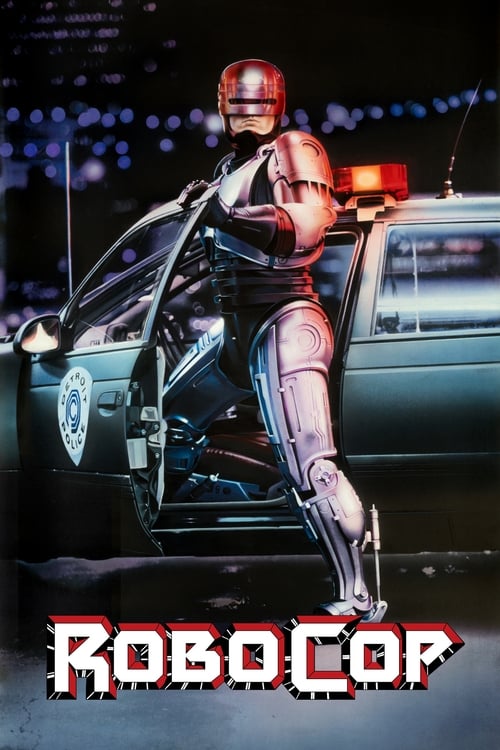
Inspired by the resurgence of sci-fi and the emergence of more mature-themed comics in the 1980s, RoboCop tells the story of a police officer in a decaying Detroit. He is assigned to the most violent part of the city, eventually killed, and then resurrected by a heartless corporation in its own image. He is RoboCop.
Peter Weller was cast partly because of his small stature—he could fit into the suit without the character towering at over seven feet tall. Weller does an amazing job emoting through the suit and helmet, conveying a sense of sadness and lost humanity. He is surrounded by capable actors including Nancy Allen, Ronny Cox, and Kurtwood Smith. Smith stands out as Clarence Boddicker, a psychopathic gang leader who revels in the violence he causes. Nancy Allen plays Murphy’s partner, Anne Lewis, who helps recover some of Murphy’s lost humanity. Ronny Cox plays Dick Jones, the film’s corporate villain. Paul McCrane and Ray Wise also appear as members of Boddicker’s gang.
The biggest character in the film, however, is Detroit itself. Produced in the 1980s, Detroit was widely seen as a decaying example of American decline. The auto industry was a shell of what it once had been, and the city was gutted economically. Into that void moved drugs and crime.
The violence in RoboCop is something to behold, and if you really think about what you’re seeing, it can linger with you—at least for a little while. Early in the movie, a junior executive is torn to shreds by a malfunctioning robot. Moments after he dies, people call for an ambulance, but the business meeting simply continues. Negotiations resume. Deals are discussed. “Too bad about Kenny,” one character says, and the response comes back: “That’s life in the big city.”
Paul Verhoeven doesn’t pull his punches when it comes to politics. He lampoons capitalism and the politics of the Reagan era. The criminals and corporate executives often mirror one another, repeating the same mantras. Both groups are indifferent to human life and unfazed by the death and violence that surround them.
The violence also highlights an interesting—and often overlooked—aspect of RoboCop: it’s essentially an American Christ story. As Verhoeven himself put it: “The point of RoboCop, of course, is that it’s a Christ story. It is about a guy who gets crucified in the first 50 minutes and then resurrected in the next 50 minutes, and then becomes the supercop of the world.” By the end of the film, there’s even a subtle moment where RoboCop appears to walk on water.
Despite its quintessential 1980s ultraviolence, RoboCop has a great deal to say about politics and about the America that existed when it was created.
Comments
to leave a comment
No comments yet